How Jiu Jitsu Helps Kids Build Confidence at School
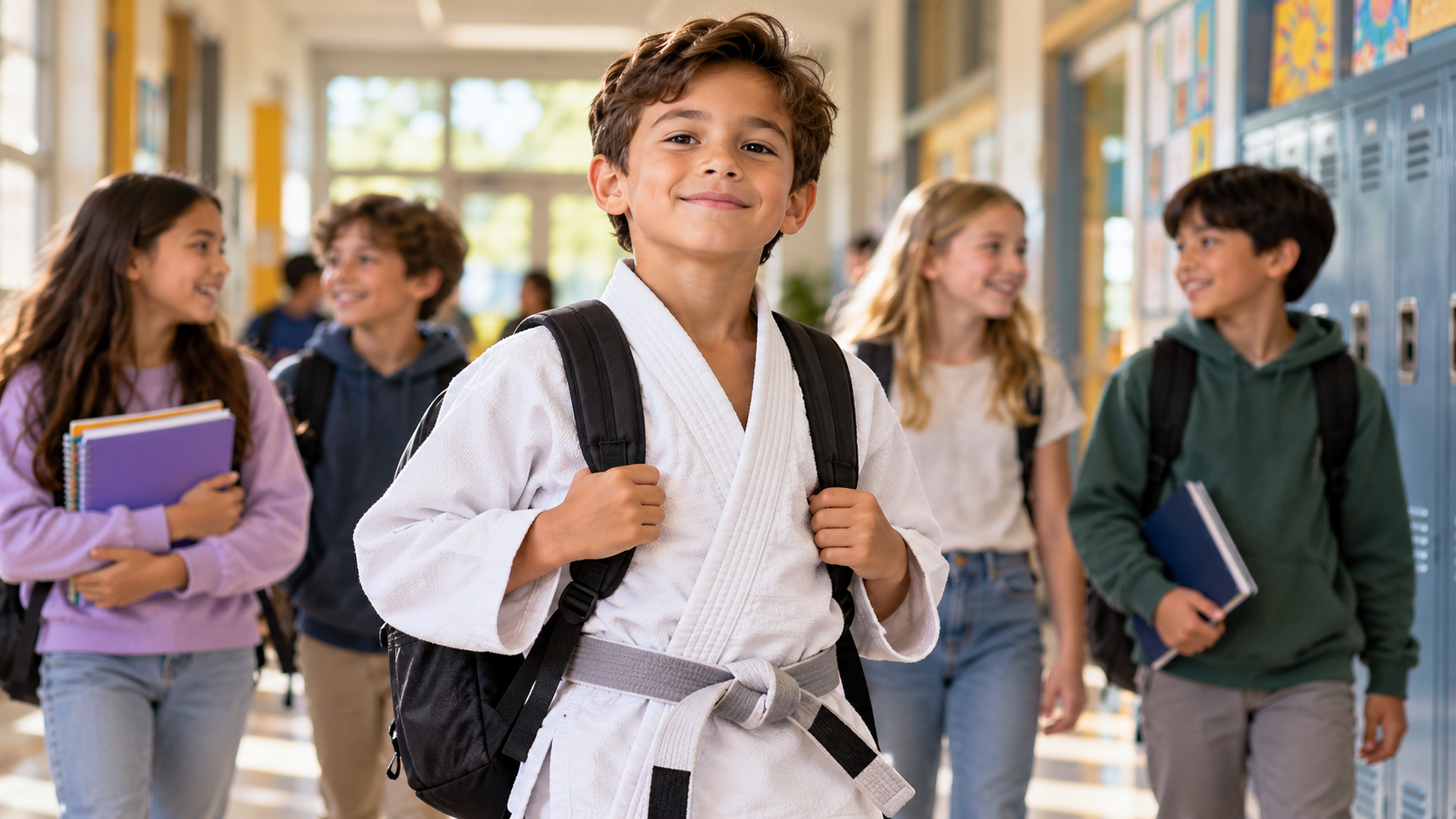
School can challenge a child’s confidence in subtle ways. A student may hesitate to raise a hand, stay quiet during group work, avoid difficult tasks, or become frustrated after a mistake. Confidence at school is not always about being outgoing. Often, it means feeling steady enough to participate, recover from setbacks, and trust that you can handle what comes next.
Jiu Jitsu can help build that kind of confidence because progress happens through practice. Kids learn a skill, struggle with it, try again, and gradually see themselves improve.
Confidence Comes From Learning Something Difficult
Children are often told to “be confident,” but confidence is easier to build when they have proof that they can improve.
In Jiu Jitsu, a child may spend several classes learning how to escape a position, keep balance, or remember a sequence of movements. At first, it may feel awkward. With repetition, the same task becomes familiar. That success teaches a simple lesson: being bad at something today does not mean you will stay bad at it.
A structured kids Jiu Jitsu class gives children regular chances to experience that cycle of effort, adjustment, and progress.
Kids Learn How to Handle Mistakes
Mistakes are unavoidable in Jiu Jitsu. A child may forget a movement, lose a position, or try something that does not work. Training gives them a safe place to learn that mistakes do not have to end the effort. Instead, they reset and try again.
That habit can be valuable in a classroom. A child who is more comfortable making mistakes may be more willing to answer a question, attempt a challenging assignment, or accept correction without feeling embarrassed.
Discipline Can Improve Focus in the Classroom
Jiu Jitsu classes require children to listen, watch demonstrations, follow instructions, and remember details before practicing with a partner.
That structure rewards attention. If a child misses an important step, the technique may not work as intended. The feedback is immediate, which gives them a reason to slow down and focus.
Clear training etiquette also teaches kids that listening, taking turns, respecting partners, and following rules are part of being a good student.
Jiu Jitsu Builds Resilience Under Pressure
School confidence is often tested when something goes wrong. A child may receive a lower grade than expected, struggle with an assignment, have a disagreement with a friend, or feel nervous about speaking in front of the class.
Jiu Jitsu gives kids repeated practice with manageable pressure. During drills or controlled sparring, they may find themselves in an uncomfortable position and need to stay calm enough to think about what to do next.
Good Jiu Jitsu instructors can challenge children while keeping the experience structured, age-appropriate, and focused on learning.
Social Confidence Can Grow Through Partner Training
Some children are comfortable academically but struggle socially. They may find it difficult to approach other kids, work with unfamiliar classmates, or speak clearly when they need something.
Jiu Jitsu naturally involves interaction. Children work with different partners, take turns, communicate, and learn how to cooperate while practicing. Sometimes they understand a movement quickly. Other times, their partner does. That helps teach patience and humility.
For shy children, this structured social environment can feel easier than being told simply to “go make friends.” There is already a shared activity and a clear reason to communicate.
Physical Confidence Can Affect How Kids Carry Themselves
Children often feel more secure when they become more comfortable with their own bodies.
Jiu Jitsu develops balance, coordination, movement, and body awareness. Younger children can begin developing those basics in age-appropriate Jiu Jitsu classes that emphasize movement, listening, and simple skills.
As physical confidence improves, parents may notice subtle changes. A child may stand a little taller, participate more willingly, or appear less hesitant in unfamiliar situations.
Self-Control Matters as Much as Self-Defense
Learning physical skills can make children feel more capable, but good Jiu Jitsu training also teaches restraint.
Kids learn that knowing how to control a position does not mean they should use those skills whenever they are upset. They are expected to respect their partners, follow rules, and stop immediately when required.
That combination of capability and self-control can be useful at school. Confidence does not need to look aggressive. A confident child can walk away from unnecessary conflict, ask an adult for help, speak clearly, and make safer decisions.
Progress Takes Time
Parents should not expect an overnight personality change. Some children become comfortable quickly. Others need longer before changes are noticeable.
Real confidence often appears in small ways first: trying again after frustration, volunteering an answer, joining a group, or staying calmer when corrected.
Consistency matters more than dramatic progress. Each class gives a child another chance to practice patience, focus, communication, and problem-solving.
Confidence That Reaches Beyond the Mat
Jiu Jitsu cannot solve every challenge a child faces at school, and it should not be treated as a quick fix. What it can provide is a regular environment where children practice doing difficult things without giving up.
They learn that improvement comes from showing up, listening, making mistakes, and trying again. They learn to manage pressure, work with other people, and trust skills they have earned through practice.
Those lessons can gradually change how a child approaches school. Confidence becomes less about never feeling nervous and more about knowing what to do when something feels difficult. For many kids, that is the kind of confidence that lasts.